If the first row is straight, the whole wall is straight. Why wall tiling starts on a batten and climbs bottom to top, how outlets get clean round cuts instead of hammer holes, and where the bathroom and kitchen dado should end.
Wall tiling is a discipline of straight lines: the eye forgives little on a wall at eye level. The entire outcome hangs on the first row - which is why it is never laid on guesswork, but on a dead-level wooden or aluminium batten fixed to the wall, with the rows climbing from it bottom to top.
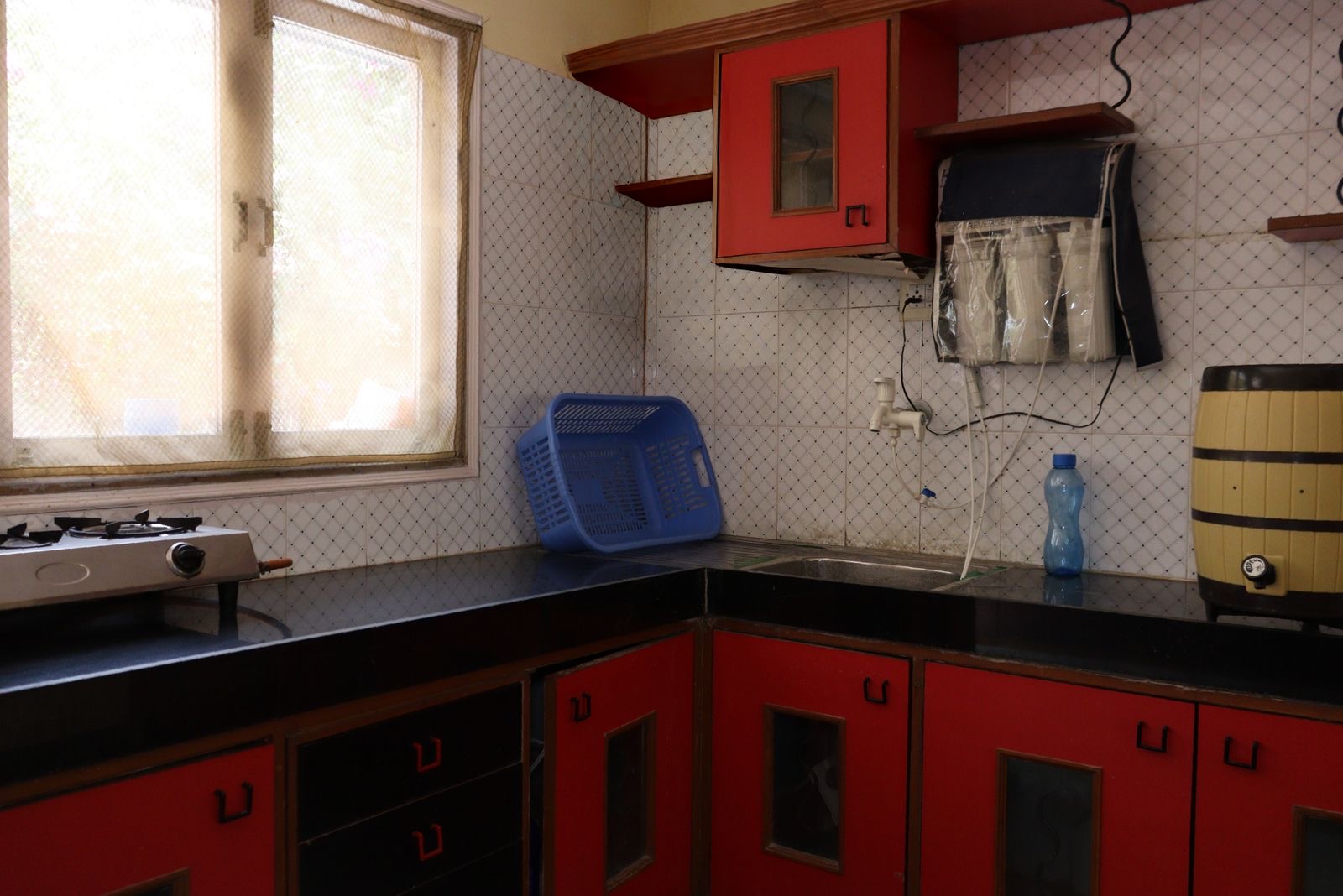
Heights are decided by use: bathroom walls are tiled full height or to about 2.1 m, and the kitchen dado runs about 600 mm above the counter, or as the design says. One sequencing rule prevents the ugliest repairs: plumbing outlets, mixer bodies and geyser points are fixed first - then the tile goes around them.
Two mistakes that cannot be fixed later
- A hammer hole at the outlet: the tile cracks and even the cover plate cannot hide the damage. Cut a clean round hole with a drill and hole saw, sized to the outlet.
- A crooked first row: the error grows with every course and meets the ceiling as a visible wedge. Start on a level batten and check plumb on every row.
The right sequence, in six steps
- Prepare the wall: plaster rough, straight and clean.
- Fix a level batten for the first row.
- Apply adhesive to the wall and to the tile.
- Lay bottom to top, row by row, with spacers.
- Cut outlets with a hole saw - clean, round, to size.
- Finish external corners with PVC or aluminium trim.
Numbers worth remembering
- Bathroom wall tiles: full height or about 2.1 m, per design
- Kitchen dado: about 600 mm above the counter
- Joints: about 2 mm
- Plumb: checked on every row
- Corners: finished with trim
Site checklist
- Outlets and plumbing done before tiling
- First row on a batten; every row checked for plumb
- Outlet cuts by hole saw; corners trimmed
- The joint line straight all the way to the ceiling
If the first row is straight, the whole wall is straight. This guide is adapted from BHK99's illustrated site handbook series. The outlets behind these tiles are set in bathroom fittings heights; the joints between them are sealed in grout and joints.