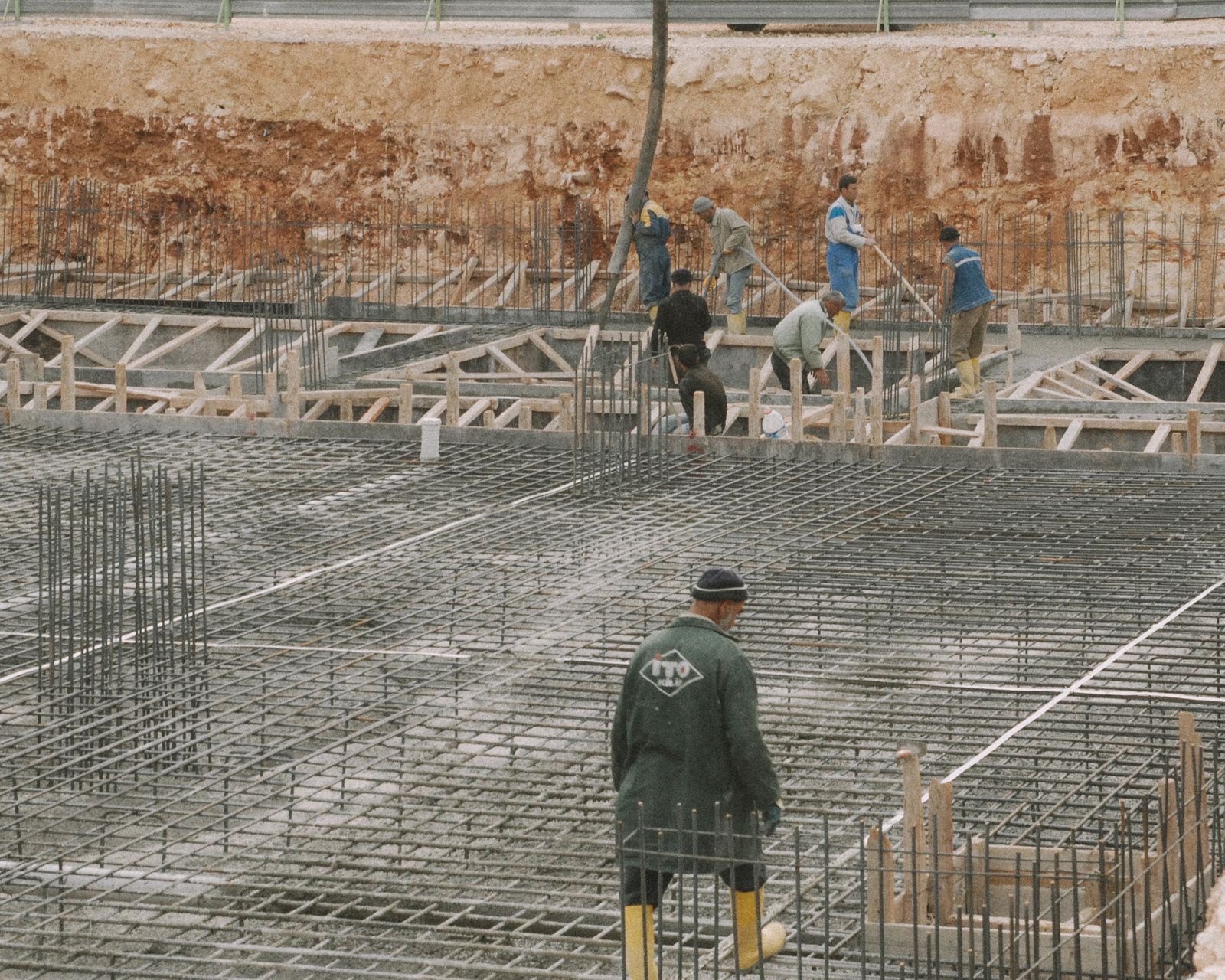
The plinth beam ties your columns together at ground level, and the DPC above it is the layer that stops dampness climbing into the walls. This guide covers the filling, the casting, the numbers worth remembering and the checks before you pour.
The first strong band of a house above ground level is the plinth beam, and the thin layer on top of it - the damp-proof course, or DPC - is what keeps ground moisture out of the walls for the life of the building. Both are cast early, both get buried under later work, and mistakes in either cannot be fixed without breaking things open.
A plinth beam ties all the columns together at ground level, carries the wall load, and reduces cracking when the ground settles slightly. The plinth itself should stand at least 450 mm above the surrounding ground (NBC 2016), so rainwater stays out. A plinth is not just height - it protects the house from water, dampness and settlement, all three.
Two mistakes that cannot be fixed later
- Filling dumped in one go, with no compaction. Hollow gaps stay inside; months later the floor sinks and the tiles crack. The right way is layers of about 150 mm, each sprinkled with water and compacted with a rammer or plate compactor.
- No DPC laid. Ground moisture rises through the bricks: plaster swells, paint peels, and white salt patches appear on the wall. The usual DPC is about 40 mm of 1:2:4 concrete with a waterproofing compound, laid over the full length of the plinth beam without a break.
The right sequence, in six steps
- Fill soil in layers around the footings and column stubs, compacting each layer.
- Place the plinth beam cage between the columns - cover blocks below, shuttering on both sides.
- Cast the beam in M20 concrete with a vibrator; side shuttering can open after 24 hours.
- Fill inside the plinth with murrum or good soil in ~150 mm layers, watered and compacted.
- Lay the DPC over the full length of the plinth beam, with no breaks anywhere.
- Lay level PCC over the compacted filling - the floor will be built on this later.
Numbers worth remembering
- Plinth height above ground: at least 450 mm (NBC 2016)
- Cover on the plinth beam facing soil: 30 mm (IS 456, Table 16)
- Filling layers: about 150 mm each, compacted
- DPC: about 40 mm thick, 1:2:4 mix with waterproofing compound
- Concrete grade: M20 for mild exposure, M25 for moderate (IS 456, Table 5)
Site checklist before and after casting
- Plinth level the same at every corner - check with a level pipe
- Beam steel and rings as per the drawing, cover blocks under the beam
- Filling in layers, each one compacted; no waste, roots or debris in the fill
- DPC continuous over the full length, nowhere broken
- Seven days of curing after the DPC
Get the plinth right and every wall above it starts dry, level and tied together. This guide is adapted from BHK99's illustrated site handbook series; the same checks are part of how we run our own sites. Read how brick masonry continues from here, see our published construction rates, or send an enquiry to plan your build.