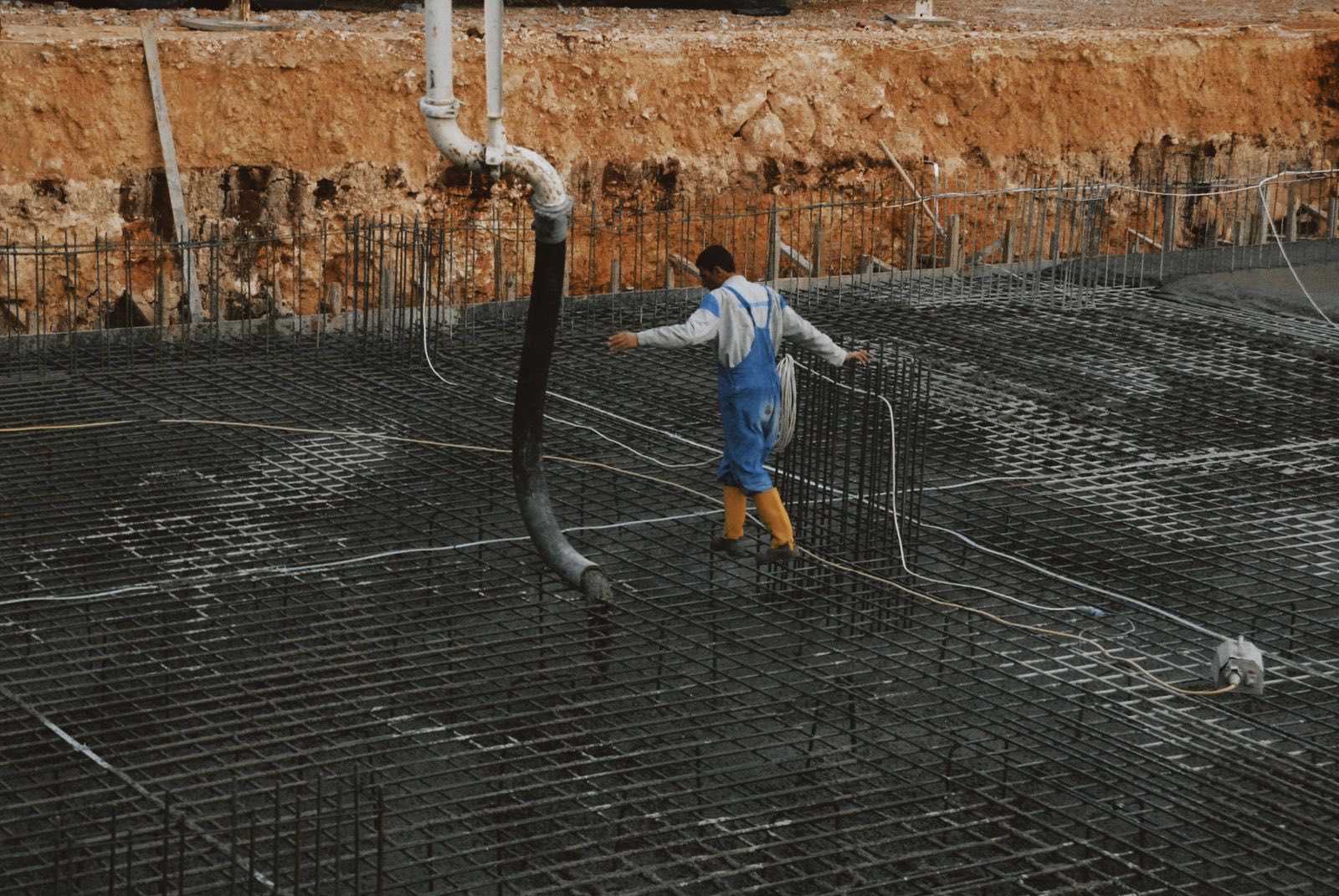
Good concrete is right materials, right water and right checks. More water makes the work easier and the structure weaker - so measure it, run a slump test at every casting, and keep cubes with dates on them. Here is the whole discipline in one page.
Concrete is four ingredients - cement, sand, aggregate and water - and strong concrete is simply those four in the right proportion, checked the same way every time. Up to grade M20 a nominal mix is permitted, commonly 1:1.5:3 of cement, sand and aggregate (IS 456); above that, the mix must be designed.
The single most damaging habit on small sites is adding water to make concrete easier to place. More water means less strength, cracking and a dusty surface. In RCC the water-cement ratio must not exceed 0.55 for mild exposure and 0.50 for moderate (IS 456, Table 5). If more workability is needed, the answer is an admixture - never a bucket of water.
Two mistakes that cannot be fixed later
- Extra water on top: thin, runny concrete that flows easily and dries weak. Measure the water in a marked container for every batch.
- Sand with mud in it: mud stops cement bonding with the aggregate, and the concrete turns out weak and crumbly. Press sand in your fist - no mud should stick to your hand - and use aggregate of mixed sizes.
The slump test and cube test, step by step
- Fill the slump cone in 4 layers, tamping each layer 25 times with the rod.
- Lift the cone straight up in 5-10 seconds without shaking it.
- Measure how far the concrete settles - that is the slump.
- Fill 150 mm cube moulds in 3 layers, tamping each at least 35 times.
- After 24 hours, move the cubes out of the moulds and into a water tank.
- Test the cubes in a machine at 7 and 28 days - the 28-day strength decides.
Numbers worth remembering
- M20 nominal mix: 1 : 1.5 : 3 (IS 456)
- Slump for lightly reinforced slabs and beams: 25-75 mm (IS 456)
- Slump for heavily reinforced sections: 50-100 mm (IS 456)
- Cube: 150 mm, tested at 7 and 28 days (IS 516)
- Sampling: 1 sample of 3 cubes per 1-5 cubic metres, 2 samples for 6-15 (IS 456, 15.2.2)
Site checklist
- Cement fresh - manufacturing date checked on the bag
- Sand and aggregate clean; water measured with a marked bucket
- A slump test at every casting, not just the first one
- Cube moulds clean and oiled; date and location written on every cube
- Cube reports filed and kept
Do not thin concrete to make the work easier - the building pays for it later. This guide is adapted from BHK99's illustrated site handbook series. See where this discipline matters most in columns and the roof slab, or ask us about our quality process via an enquiry.