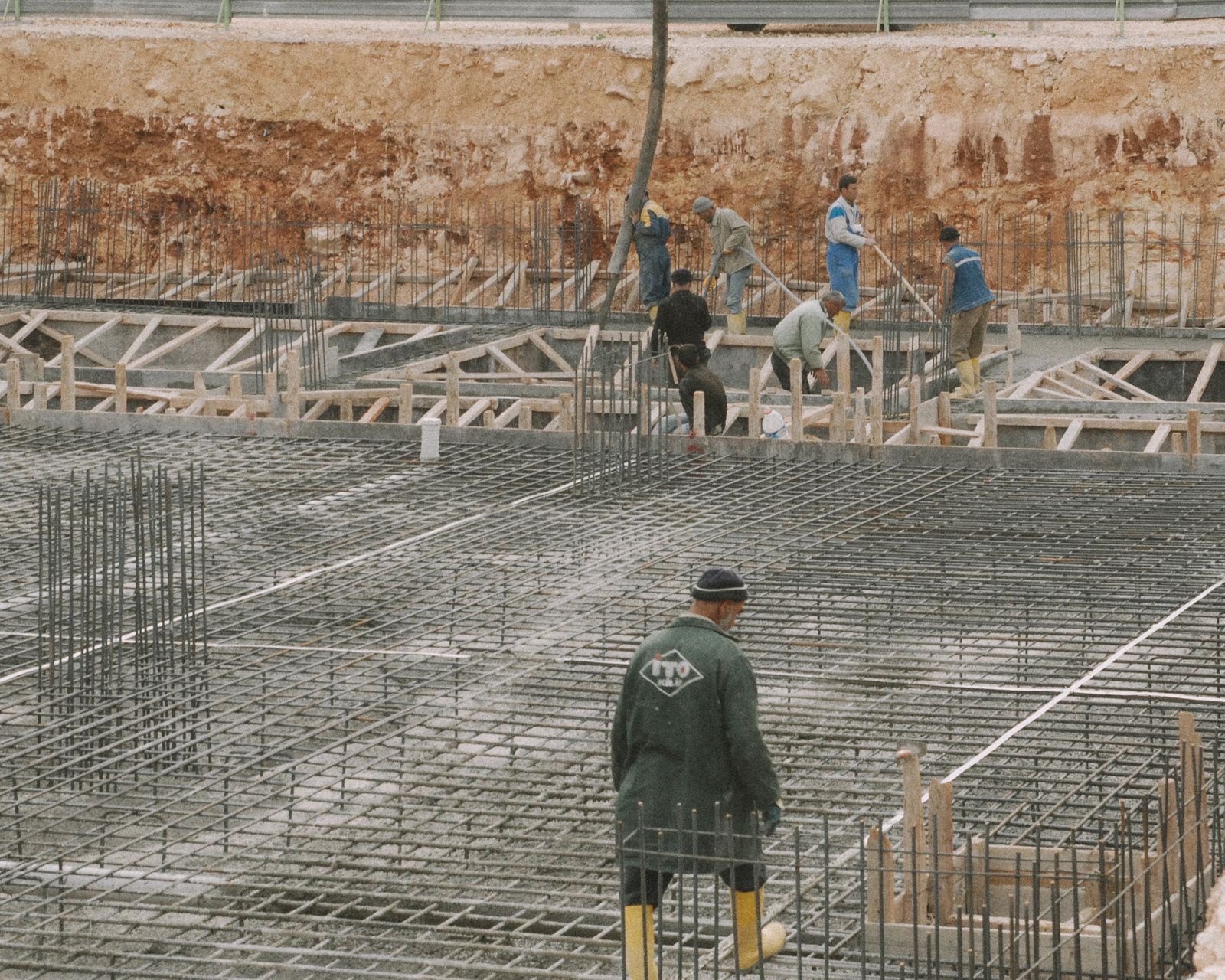
The same soil that grows cotton can crack a badly founded house. This guide explains why black cotton soil swells and shrinks, what a soil investigation tells your engineer, and why foundations here are designed differently - without guessing numbers that belong to your soil report.
Across large parts of Central India - including the belt that runs through Nagpur, Chhindwara and Seoni - plots often sit on what farmers prize and builders respect: black cotton soil. The same clay that holds moisture for a cotton crop swells when it gets wet and shrinks as it dries. A house founded on it without care can crack, not because the structure above is weak, but because the ground below keeps moving.
This guide from BHK99 Real Estate and Construction explains what black cotton soil is, why it moves, what a soil investigation tells your engineer, and the kinds of foundations engineers use on it. It deliberately gives no depths, sizes or bearing values: those come from your plot's own soil report and your structural engineer, never from a general article.
What black cotton soil is
Black cotton soil is an expansive clay. In the Indian soil classification system it falls among the high-plasticity clays - soils whose volume changes noticeably with their water content. In much of Central India it formed over long periods from the weathering of Deccan basalt, which is why it dominates the region's plains and valley floors.
You can often recognise it without a laboratory:
- In summer the open ground develops a network of wide, deep cracks.
- In the rains the same ground turns soft and sticky, and water stands on it rather than draining through.
- The colour runs from dark grey to near black, and dried clods are hard to break.
A field impression is a reason to investigate, not a conclusion. Only laboratory tests on samples from your plot can say how expansive your soil actually is, and plots a few hundred metres apart can differ.
Why it moves: the swell and shrink cycle
The clay minerals in black cotton soil take water into their structure. When the monsoon wets the ground, the soil swells and pushes - upwards and sideways - against anything resting in it. When the dry season removes that moisture, the soil shrinks, cracks open, and support is withdrawn from whatever was resting on it.
Two things make this cycle hard on buildings:
- The movement repeats every year, so a foundation in the active zone is loaded and unloaded season after season.
- The movement is rarely uniform. The soil under a shaded corner, near a leaking pipe, beside a tree, or under a paved apron wets and dries differently from the rest, so one part of the house can rise or drop relative to another.
It is this differential movement - not settlement alone - that produces the familiar diagonal cracks above window corners, doors that bind in one season and swing free in another, and gaps that open and close between plinth and apron.
The soil report: your first construction document
Before anyone argues about foundation types, the ground should be investigated. For a house this is a modest exercise, done once, and it anchors every structural decision that follows.
- A subsurface investigation, the Indian practice for which is set out in IS 1892, establishes what layers lie under the plot and where, and whether and where water is met.
- Laboratory tests on the samples, run under the IS 2720 series, describe the soil: its grading and plasticity, and - for suspected expansive soils - indicators such as the free swell test that show how strongly it reacts to water.
- The classification of the soil under IS 1498 and the test results together tell the engineer whether the plot behaves as an expansive soil at all, and how aggressive it is.
Ask to see the report, and ask your engineer to point out two things in it: the layer the foundation will rest in, and the depth to which seasonal moisture change - and therefore movement - is expected. That second item, often called the active zone, is the heart of every design decision on this soil.
What engineers do differently on expansive soil
There is no single correct foundation for black cotton soil; there is a correct foundation for your soil report, your building and your budget. The approaches an engineer will weigh include:
- Taking the foundation below the active zone, so it rests in ground whose moisture - and volume - stays nearly constant through the year.
- Under-reamed piles: bored piles with one or more bell-shaped bulbs near the base. Indian practice for these, IS 2911 Part III, was developed specifically for expansive soils - the bulbs anchor the pile in stable ground so the swelling upper soil cannot lift it.
- Stiffening the structure at foundation level - continuous, well-tied foundation beams and plinth bands - so the building moves as one unit rather than cracking piece by piece.
- Isolating the structure from the swelling soil, for example by not resting floors and aprons directly on expansive fill, or by replacing a layer of expansive soil under non-structural elements with non-expansive material.
Which of these applies, alone or in combination, is a design decision from the report - not a menu to choose from by price.
Water management is part of the foundation
On expansive soil, the cheapest protection is keeping the moisture around the house as steady as possible:
- A paved apron around the plinth, sloped away from the building, limits how much rain soaks the soil at the foundation line.
- Rainwater pipes should discharge clear of the building, into drains - never against the plinth.
- Water-supply and drainage lines near the foundation deserve careful jointing, because a slow leak quietly maintains a wet pocket in soil that swells when wet.
- Large trees very close to the house pull moisture from the soil and add a drying cycle of their own; discuss distances with your engineer rather than planting against the plinth.
None of this replaces a correct foundation. It protects one.
What you can ask your engineer
You do not need to design anything, but on this soil you are entitled to clear answers:
- Was a soil investigation done on this plot, and may I see the report?
- Does the report classify the soil as expansive, and how strongly?
- To what depth does the report expect seasonal movement, and where does the chosen foundation rest relative to that?
- Why this foundation type, and what else was considered?
- What does the design assume about drainage, aprons and plumbing around the plinth - and is that reflected in the drawings I will build from?
An engineer working from a real report will answer these from its pages. Vague answers are the warning sign.
How BHK99 approaches it
BHK99 builds in exactly this belt - Chhindwara, Seoni and Nagpur - and treats the soil report as the first drawing of the project. Our structural design service designs the foundation from your plot's investigation, not from habit, and the drawings that reach site show what was designed. If you already have a plot and a soil report, we will review the foundation design with you; if you have neither, getting the investigation done is the first step we plan with you.
See the published construction rates for Nagpur, or send an enquiry for a foundation review with your soil report.
This article explains concepts. Depths, sizes, soil values and foundation choices for any real plot come from that plot's soil investigation and a qualified structural engineer.